Since its launch in 2022, BIOMETHAVERSE has been pushing the boundaries of biomethane production, demonstrating five cutting-edge pathways across Europe and driving forward the green transition. Beyond its technical breakthroughs, the project is already leaving a mark on the scientific community, contributing to peer-reviewed research that expands the frontiers of bioenergy knowledge.
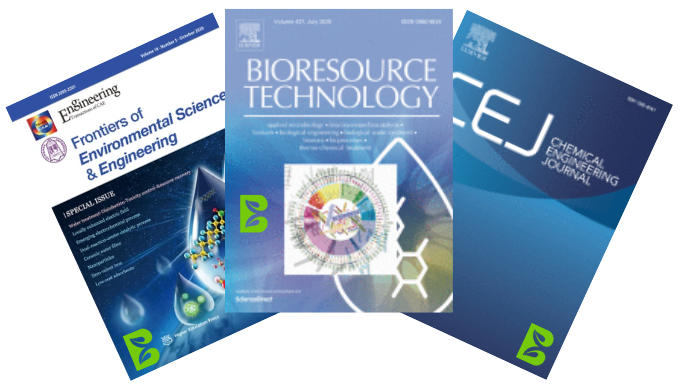
In 2025 alone, BIOMETHAVERSE partners have published several high-impact scientific papers, many indexed in Scopus, underscoring the project’s role as a catalyst for innovation at the intersection of biotechnology, electrochemistry, and renewable energy systems.
Among the most notable publications is a study from DTU on the transformative potential of 3D printing in microbial electrochemistry, highlighting how additive manufacturing can enhance reactor design and electrode performance in sustainable energy systems. Read the paper
Complementing this, Politecnico di Milano (POLIMI) has contributed long-term insights into microalgae-based digestate treatment, demonstrating how biological systems can effectively recover resources and cut treatment costs even under challenging outdoor conditions. Read the paper
Another DTU-led publication delves into electromethanogenesis—the process of converting CO₂ into methane—using 3D printed carbon electrodes. The findings reveal how optimising surface properties and geometry can boost efficiency, paving the way for scalable carbon utilisation technologies. Read the paper
Meanwhile, a forthcoming contribution from FAU (Friedrich-Alexander-Universität Erlangen-Nürnberg) employs computational fluid dynamics (CFD) to optimise flow dynamics in bioelectrochemically enhanced anaerobic digesters, offering new insights into reactor design for renewable gas production.
Scientific dissemination also extends beyond journal publications. RISE (Research Institutes of Sweden) supported an advanced-level thesis, in collaboration with Uppsala University, investigating the effects of pyrolysis water on biological syngas methanation, providing valuable evidence for the robustness of microbial communities under real-world operating conditions. Read the thesis
Together, these outputs reflect BIOMETHAVERSE’s commitment to open science and collaborative progress. By bridging laboratory innovation with industrial application, the project is not only demonstrating next-generation biomethane technologies—it’s actively shaping the knowledge base that will support Europe’s energy transition for decades to come.